Tibet Learning
Five notes on Tibet and connected issues.
1.
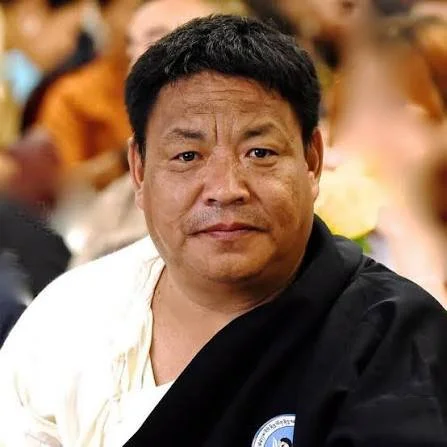
LOBGA RANGZEN
On July 2, 2026, a Tibetan taxi driver sacrificed his life outside the United Nations in New York City. Who was Lobga Rangzen, and what was he willing to die for?
-
52-year-old Lobga Rangzen was a longtime resident of Queens, New York. Born in 1974 in Chinese-occupied Tibet, he lived as a refugee and Buddhist monk in India before immigrating to New York City in 2006. He was a beloved brother, uncle, community member, and a dedicated activist for Tibetan independence from Chinese rule, serving as president of the Tibetan National Congress and former executive member of the NY-NJ regional chapter of the Tibetan Youth Congress. [1, 2]
On the morning of July 2, 2026, shortly before his death, Lobga recorded a message about China’s repressive policies aimed at erasing Tibetan identity. One day earlier, China’s “Ethnic Unity” law took effect, the latest in a series that undermines China’s Regional Ethnic Autonomy Law, which has guaranteed Tibetans and other nationalities the right to self-government and priority of their own language since 1984. [3]
The Ethnic Unity Law gives legal cover for China’s continuing destruction of Tibetan culture, including separating one million Tibetan children from their families and punishing Tibetans seeking to preserve or teach their language. It also applies beyond China’s borders, declaring that China will punish individuals and organizations that “undermine national unity” or create “ethnic division”. [4-9]In his recording, Lobga urged Tibetans in exile to strengthen their advocacy for the people of Tibet and the Tibetan nation. Later that day at 5:45 pm, in 100-degree Fahrenheit weather, Lobga stood outside the United Nations building dressed in Tibetan robes and carrying the Tibetan national flag. He then set himself on fire in an act called self-immolation. He was at least the 170th Tibetan to self-immolate for Tibetan freedom and the first outside Asia.
As he stood burning, he threw sheets of white paper into the air with messages of ‘Free Tibet’ and ‘China out of Tibet.’ Lobga succumbed to his injuries and died at around 7:04 pm EDT at Bellevue Hospital.
Since July 2, grieving Tibetan New Yorkers have kept a round-the-clock vigil at the site of Lobga’s sacrifice. Local Tibetans and organizations such as the Tibetan National Congress, the Tibetan Youth Congress, Students for a Free Tibet, the Tibet Action Institute, and others have called on UN High Commissioner for Human Rights Volker Türk to break his silence on China’s policy of forcibly separating about one million Tibetan children from their families to place them in Chinese-run colonial boarding schools.
Read the next note to learn more about Tibet and connected issues, and visit the last note to learn what you can do to support Tibet and Tibetans.
SourcesInternational Campaign for Tibet mourns passing of Lobga Rangzen
Tibetan National Congress Wiki and Instagram; Tibetan Youth Congress website, Wiki, and Instagram.
China’s Regional Autonomy Law [University of Minnesota Human Rights Library]
Summaries of China’s “Ethnic Unity” law by Amnesty International and International Campaign for Tibet
Separation of 1 million Tibetan children from families [Office of UN High Commissioner for Human Rights 2023]
Dissenting Voices: The State of Expression in Tibet [Tibetan Centre of Human Rights and Democracy]
Children’s Speech Harmonization Plan [Human Rights Watch 2021]
Language Erasure: Factual Evidence of the Chinese Government's Restrictions on Tibetan Language Rights [Tibet Policy Institute 2026]
China’s Language Policy in Tibet [Tibet Policy Institute 2025]
2.
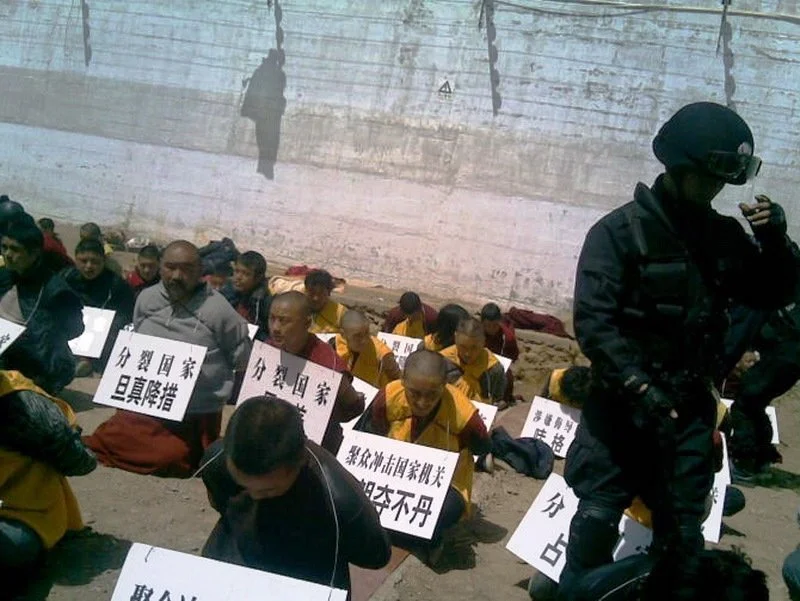
Tibetans in Chinese custody, 2008. (Students for a Free Tibet)
FREE TIBET
Separate the truth from misleading stories that spread fear and bias against Tibetans, their culture, and their freedom struggle.
-
Photo context
The above photo was taken inside Tibet in the wake of the March 2008 mass Tibetan uprising against China’s occupation, then in its 57th year. China was the host of the 2008 Summer Olympic Games, and Tibetans across the 2.5 million sq km Tibetan Plateau rose up in defiance to send a message to the world that China’s rule over Tibet was unjust and unwanted. Most of the 2008 Tibetan protesters who were imprisoned in China’s penal system have disappeared under custody without a trace or word from Chinese authorities, as has been the case with previous uprisings. [Tibet Museum; Tibetan Centre for Human Rights & Democracy]
Sources
China does not allow international journalists to travel freely inside Tibet. Because of this, reports about injustices in Tibet depend on human rights groups and Tibetan advocacy organizations outside Tibet who work together with Tibetans inside the region.
What’s happening now?
Below is an example showing the truth, false information that distracts from it, and the effects of misleading stories. It ends with a reminder about the awareness needed going forward.
Truth
Human Rights Watch and Tibetan advocacy groups report that Chinese authorities have engaged in mass DNA collection of Tibetans to create databases, including blood samples taken by local police from children as young as five.
Because Tibetans do not have the same power and resources as China, most people do not know about the harm China has caused Tibetan children through surveillance like this DNA database and by separating 1 million Tibetan children from their families to force them into Chinese-run boarding schools.
Dis-/Misinformation
Instead, people are more likely to have seen a manipulated video first shared by an anonymous Chinese account on X (formerly Twitter) in 2023, accusing the Dalai Lama, Tibet’s main human rights leader, of abusing a child at a public event. Rather than explaining Tibetan cultural traditions and sharing the child’s and family’s happiness in meeting the Dalai Lama, media outlets like CNN and the New York Times spread a story that caused fear, anger, and distress.
Impact
Stories spreading false or misleading information about Tibetans take advantage of the public’s lack of knowledge about Tibetans and Tibetan culture. While Tibetans are trying to tell the world about the abuse of Tibetan children at the hands of the Chinese government, they must deal with a misinformed public distracted with a tainted view of their human rights leader as a child abuser, a view that Tibetans speak out against and leads to discrediting Tibetan voices about their history and struggle for freedom.
Be aware of assumptions and bias
Journalists covering Tibet and Tibetans must be aware of their own assumptions and properly cite their sources in order to minimize harm to their subjects and the public. Media outlets should The public should be aware of China’s political project to bias the public against Tibetans and cast doubt on Tibetan accounts of injustice.
Read the next note to learn more about Tibet and connected issues, and visit the last note to learn what you can do to support Tibet and Tibetans.
3.
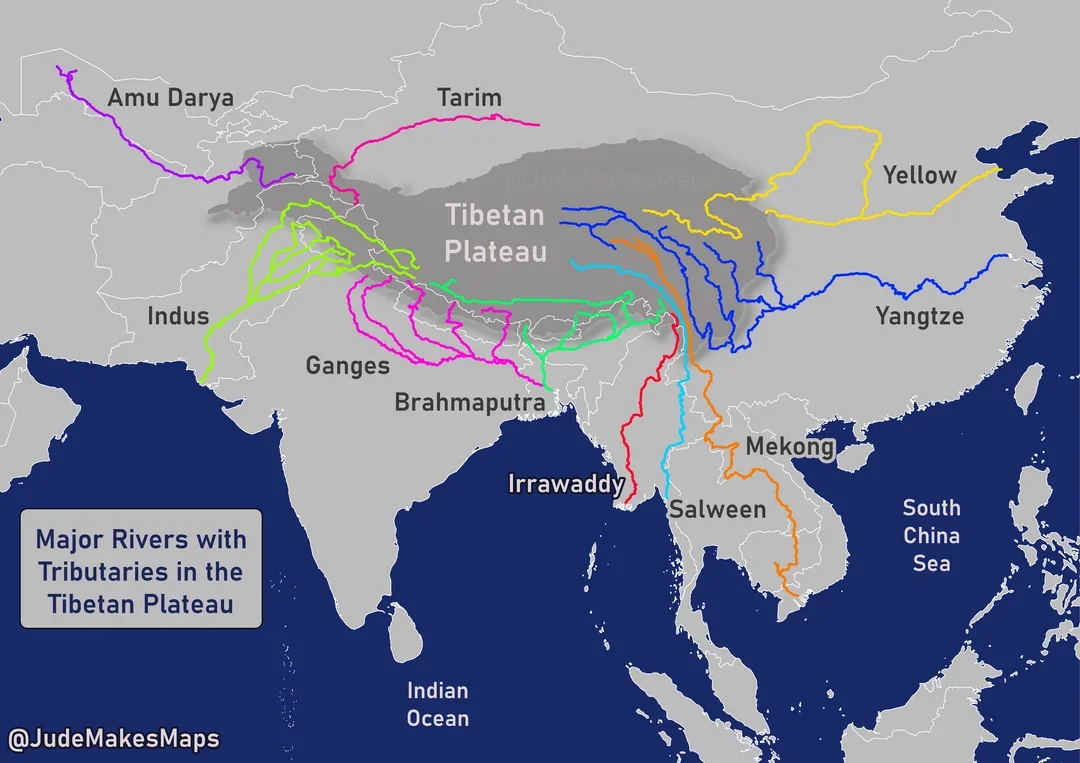
Major rivers sourced in Tibet. (JudeMakesMaps)
ASIA’S WATERSHED
Tibet provides fresh water to lands that nearly 2 billion people call home. Learn about its vital role in the world’s ecosystem.
[Sources: National Academy of Sciences; Michigan State University]
-
Note Summary
This note explains how to find Tibet on a map, describes why Tibet is called "Asia's Water Tower," and concludes with an example of Tibetan nomads' role in sustaining Tibet's ecosystem and China's abuse of that ecosystem.
Where is Tibet?
At 2.5 million sq km, the Tibetan Plateau forms the natural borders of the nation of Tibet. 4500 meters above sea level, Tibet towers over its neighbors by an average of 2000 meters, or 1.25 miles. As the world's highest and largest plateau, Tibet drives the Asian monsoon and significantly influences global circulation patterns. [1]
If Tibet's sovereignty were recognized, China's land area would shrink by 27%. But after colonizing Tibet in 1951, China divided it into smaller pieces such as the Tibet Autonomous Region (the western half of Tibet), Qinghai Province (northeast Tibet), and Sichuan Province, which China doubled in size by expanding its western front to include part of Tibet. This artifice obscures Tibet and its powerful role in the world and on China's revenues.
Asia's Water Tower
Tibet is home to the headwaters of ten of Asia's major rivers. Supplying water to people and wildlife living downstream in such countries as Vietnam, Cambodia, Laos, Thailand, Myanmar, Bangladesh, Nepal, Pakistan, India, and China, "The Water Tower of Asia" is one of Tibet's titles; "Roof of the World" is another. More than one billion people receive life from vast river systems that originate in Tibet; indirectly, these rivers sustain the lives and livelihoods of half of Asia.
"China has dammed almost all the rivers of the Tibetan Plateau. It has dammed the Brahmaputra, the Mekong, the Yellow River, the Yangtze, the Indus, and the Sutlej- the major rivers of Asia but has not signed a single water-sharing agreement with its downstream nations." -Dr. Lobsang Yangtso, Senior Researcher at International Tibet Network, China's River Politics on the Tibetan Plateau.
Tibet's Ecosystem: Nomadic care versus state abuse
Traditional grazing practiced by Tibetan nomads is crucial for Tibetan rangelands, promoting plant diversity and nectar production [Thupten Wodzer, Tibetan environmentalist and Program Director at Panda Mountain, writing for Yale Environment Review in 2017]. But in 2020, China's Ministry of Education issued new national security guidelines wherein Tibetan herders are portrayed as bringing ecological destruction to the Tibetan Plateau. [2]
This is not the first time the Chinese government has spurned findings by Tibetan environmental specialists and even its own research scientists. The South China Morning Post has reported on China's ambition to grow an artificial forest project in Nagchu, Tibet, achieved by melting permafrost. This was done to accommodate Chinese troops and settlers who were struggling emotionally with Nagchu's near-polar climate.
In a report published on the website of the Science and Technology Department of the Tibet Autonomous Region, Chinese scientists described the project as creating "the most expensive trees in the world" that would upset the ecological balance of the Tibetan Plateau. Despite concerns about cost and environmental impact, the interest of Chinese President Xi Jinping has driven officials to ensure its success. SCMP's 2017 article reports that a forest has begun to emerge, encompassing an area larger than 30 sports stadiums. [South China Morning Post; Tibetan Review]
Local Tibetans as Tibet's Frontline Defenders
A 2026 article in Global Voices describes how Tibetans in eastern Tibet pioneered the now-institutionalized co-management model for ecological conservation and climate change mitigation. This region of eastern Tibet encompasses the watersheds of Kham and Amdo (also known as Dzato, Drito, and Mato), which China calls Sanjiangyuan. The Dzato-Drito-Mato region is home to Asia's three largest rivers, and approximately 90% of the 600,000 people who reside there are Tibetan herders.
Since the 1990s, local Tibetans have been forerunners in ecological conservation efforts to protect endangered species, including snow leopard, Tibetan antelope, wild ass (onager), wild yak, and black-necked crane populations. But in the late 2000s, thousands of Tibetan herders were forced to reduce grazing or even relocate to "eco-villages" after China incorporated these conservation areas into the Sanjiangyuan Reserve.
Against this backdrop, Tibetans continued promoting community-led conservation. "For example, a Tibetan environmental activist group, the Snowland Great Rivers Environmental Protection Association, was established in 2001 to organize a network of more than 900 Tibetan volunteers to monitor wildlife and develop village-level sustainable development projects in Tibetan villages by facilitating multi-stakeholder dialogues and adopting a co-management approach."
Tibetan communities pioneered the now-institutionalized community co-management model to integrate their livelihoods with conservation needs with the help of domestic and international NGOs. Today, they are still standing on the frontline, protecting Asia's essential water sources for billions of people along the three rivers.
Read the next note to learn more about Tibet and connected issues, and visit the last note to learn what you can do to support Tibet and Tibetans.Sources
National security programming for China’s new generation [International Campaign for Tibet 2021]
Other sources coming soon
4.
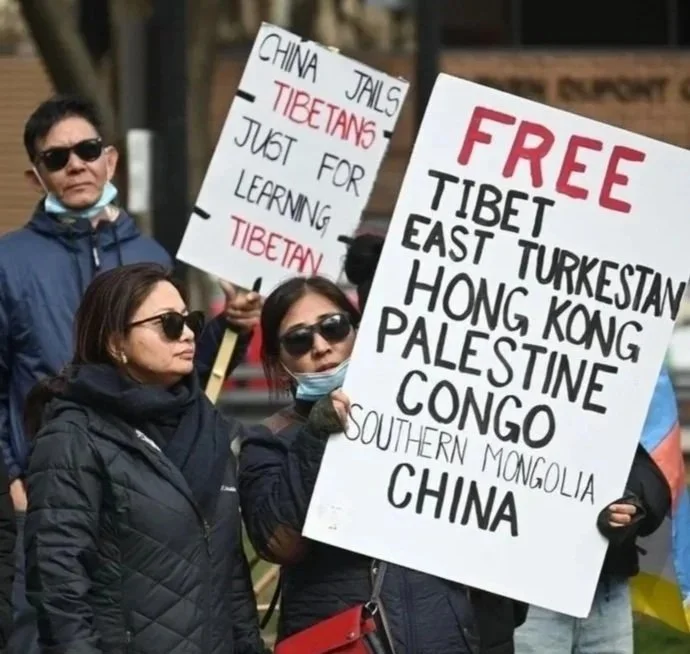
Tibetan protesters outside the Chinese Embassy in Washington, D.C., 3.10.2024. (International Campaign for Tibet)
COMMON STRUGGLES
In the above photo, a Tibetan woman calls for freedom for Tibetans, Congolese, Palestinians, Uyghurs, and others. The grounds for solidarity are apparent when examining the common forms of oppression these groups face.
-
This note will be updated soon.
Settler-colonialism
China, U.S., Israel, and Russia
“In his 2002 dissertation, Dr. Pan Yue, the current commissioner of China’s Ethnic Affairs Commission, proposed that a mass migration of 50 million Han people to Tibet and Xinjiang would simultaneously address three major problems confronting China: overpopulation, demand for resources, and the problem of ethnic and religious difference.
Pan, who became the first non-ethnic minority commissioner of ethnic policy in the history of the People’s Republic of China in 2022, suggested that Han migrants should be considered “reclaimers.” The “backwardness” of the frontier he suggested had become a danger to national security, fostering terrorist and extremist activities. He called on China to learn from a trifecta of contemporary colonizers: the United States, Israel and Russia.
Taking elements of each as a model of how contemporary China should further colonize Tibetan and Uyghur lands, he suggests that the Western expansion of settler colonialism in the United States and Russia’s imperial settlement of Siberia, should be combined with the more contemporary example of Israel’s controlled deployment of West Bank settlers and infrastructure in Palestinian lands.” -Dr. Darren Byler, Professor of International Studies at Simon Fraser University, In the Camps: China’s High-Tech Penal Colony [scroll slightly down to “Author’s Preface,” sources included]
Minerals
75% of the lithium mined by China is concentrated in the Tibetan Plateau, making China one of the top six countries in the world with the largest lithium reserves.
In 2010, billionaire businessmen Bill Gates and Warren Buffett visited China to attend the launch of Chinese battery and auto maker BYD, where they shook hands and shared the stage with the Chinese vice-chair of the Tibet Autonomous Region. [USA Today, second photo]At a recent academic conference, I heard an eminent China scholar say it outright: "China is on its way to reclaiming its status as the world's main country." This will happen sooner or later, given China's huge size and its projected economic, diplomatic, and military growth. The status of "main country" almost always depends partly on imperialism: forcing others into giving up their resources on unequal terms." -Dr. Stevan Harrell, Professor of Anthropology at the University of Washington, Downstream is actually downstream: BRI, hydropower, and Chinese imperialism in Southeast Asia
5.
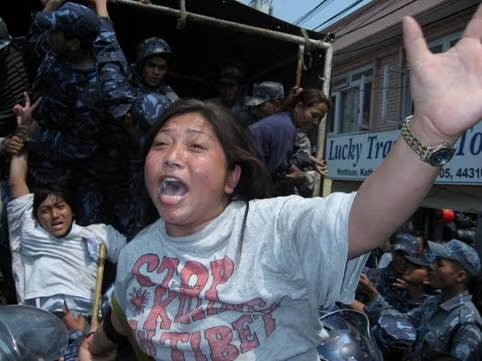
Tibetan protesters outside the Chinese Embassy are pulled into a police van in Kathmandu, Nepal, 3.31.2008. (Human Rights Watch)
WHAT YOU CAN DO
Find four ways you can support Tibetans in the drop-down menu below.
-
Call on China to Abolish its Colonial Residential Boarding School System
Sign a petition calling on UN High Commissioner for Human Rights Volker Türk to break his silence on China’s policy of forcibly separating about one million Tibetan children from their families to place them in Chinese-run colonial boarding schools.
Challenge China’s Disinformation
Donate to help the Tibetan Youth Congress establish a dedicated office in New York City to counter China’s propaganda and disinformation targeting Tibet and the late Tibetan activist and New York taxi driver Lobga Rangzen. Donations will also support TYC’s global campaign to counter Chinese propaganda and disinformation.
Support Tibetan Elders in NYC
Donate to the Himalayan Elders Project, founded in New York City and now serving 250 Tibetan and Himalayan seniors across New York, India, and Nepal. These Tibetan elders cannot safely return to their homes in Tibet and face language barriers, isolation, and the challenge of preserving their cultural identity in exile. View their Memories of Home art project.
Uplift the Aspirations of LGBTQIA+ Tibetans
Support Tibetan Equality Project, an NYC-based collective that aspires to uplift the perspectives and lived experiences of LGBTQIA+ Tibetans and reimagine what is possible in an inclusive Tibetan future. View projects your donation would support.
Prostration for Tibet
NYC Schedule & Maps
7/31 Fri: 2-7 pm Prospect Park to Brooklyn Bridge (map)
8/1 Sat: 9 am-6 pm Brooklyn Bridge to Times Square vigil (map)
8/2 Sun: 1:30-4 pm Grand Central to United Nations (map)